

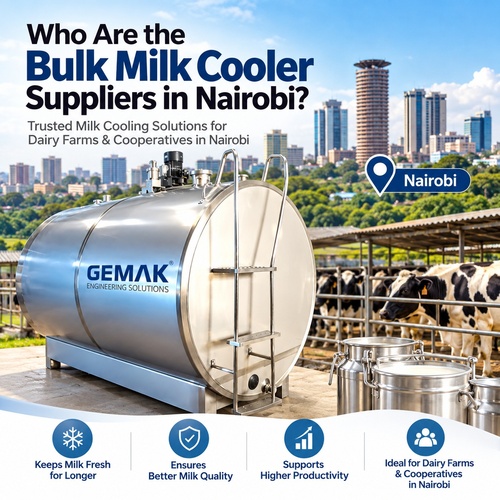
Fresh milk needs proper cooling soon after collection to help maintain its quality before transportation or processing. For dairy farmers, cooperatives, and milk collection centres in Nairobi, choosing the right bulk milk cooler is therefore an important investment. But who supplies bulk milk coolers in Nairobi? Buyers can explore local Kenyan suppliers as well as established international dairy-equipment manufacturers from countries such as India, comparing capacity, cooling performance, installation, after-sales support, and total cost before making a decision.
Why Are Bulk Milk Coolers Important for Nairobi’s Dairy Industry?
Fresh milk is sensitive to temperature and handling conditions. Rapid cooling after collection helps slow bacterial growth and preserve milk quality until the milk reaches a processor or dairy facility. A bulk milk cooler provides an insulated tank and refrigeration system for this purpose.
This is particularly relevant to milk collection centres that receive milk from multiple farmers. Instead of keeping individual milk cans at ambient temperature for an extended period, the collected milk can be transferred into a centralised cooling tank.
Example: Imagine a dairy cooperative outside Nairobi collecting milk from several small farms every morning. With a properly sized bulk milk cooling tank, the cooperative can consolidate the collection and cool it under controlled conditions before transportation. The exact equipment capacity should be determined from the cooperative’s actual collection volume and operating schedule.
Who Supplies Bulk Milk Coolers in Nairobi?
Fresh milk needs proper cooling soon after collection to help maintain its quality before transportation or processing. For dairy farmers, cooperatives, and milk collection centres in Nairobi, choosing the right bulk milk cooler is an important investment. So, who are the bulk milk cooler suppliers in Nairobi? Buyers can compare local dairy-equipment suppliers with international manufacturers from India, considering cooling capacity, tank quality, installation, after-sales support, spare parts, and overall cost before making a decision.
However, buyers should not assume that every company listed online currently has the exact equipment they need. Before purchasing, it is sensible to confirm the supplier’s current product range, tank capacity, delivery arrangements, installation capability, warranty and after-sales support.
There is also evidence of active demand for bulk milk cooling equipment in Nairobi. A recent procurement requirement in Nairobi specified 3,000-litre bulk milk cooling tanks and required supply, installation, testing, commissioning, and technical support.
This illustrates why selecting a supplier involves more than comparing the advertised tank price.
What Should You Look for in Bulk Milk Cooler Suppliers in Nairobi?
When comparing dairy equipment suppliers, consider the following:
- Cooling capacity: Select a tank according to actual milk collection volume and future requirements.
- Tank construction: Check the material used for milk-contact surfaces and the overall hygienic design.
- Cooling performance: Ask for documented cooling specifications and operating conditions.
- Temperature controls: Digital monitoring can help operators track milk temperature.
- Agitation: Proper agitation helps maintain uniformity during cooling and storage.
- Energy requirements: Check electrical requirements and expected operating conditions.
- Cleaning: The tank should be practical to clean and maintain.
- Installation: Confirm whether installation, testing, and commissioning are included.
- Spare parts: Ask how replacement components will be sourced in Kenya.
- Warranty: Understand exactly what the warranty covers.
- Technical support: Confirm who will assist with installation.
A current Nairobi-area procurement specification, for example, requires bidders to include installation, testing, commissioning, and technical support rather than simply supplying the tank.
Can Kenyan Dairy Businesses Source Bulk Milk Coolers From India?
Yes. Nairobi dairy businesses do not necessarily have to limit procurement to companies physically located in Kenya. Indian dairy-equipment manufacturers can also be considered, particularly when a buyer needs specific capacities, configurations, or customised equipment.
India has a substantial dairy-equipment manufacturing ecosystem. When comparing an Indian manufacturer with a Nairobi-based supplier, however, buyers should evaluate the complete procurement cost, not just the equipment quotation.
This includes freight, import-related costs, installation, commissioning, warranty, spare parts, technical support, and long-term maintenance.
The important question is therefore not whether the equipment comes from Kenya or India. Instead, buyers should ask whether the supplier can provide an appropriate cooling solution and reliable support for their particular dairy operation.
Why Consider Gemak for Bulk Milk Cooling Equipment?
Gemak is an Indian manufacturer of dairy-processing equipment based in Ghaziabad, Delhi NCR, India. Its published product range includes bulk milk coolers, milk storage tanks, and other dairy equipment.
According to Gemak’s published product information, its bulk milk cooler range includes horizontal and vertical configurations. The company states that its horizontal enclosed models cover capacities from 1,000 to 10,000 litres, while its vertical models cover 100 to 2,000 litres. Buyers should confirm the exact model, specifications, and export arrangements directly with the manufacturer for a Nairobi project.
For a Kenyan dairy business evaluating Gemak, the key considerations should include required capacity, cooling requirements, available electrical infrastructure, shipping, installation, warranty, spare-parts availability, and technical support.
Nairobi Suppliers vs. Indian Manufacturers: What Should Buyers Compare?
| Factor | Nairobi/Kenya Supplier | Indian Manufacturer |
| Communication | Local communication may be convenient. | Confirm international communication arrangements. |
| Equipment availability | Check current stock. | Confirm production and shipping schedule. |
| Customisation | Depends on the supplier | Depends on the manufacturer |
| Shipping | Local logistics may be simpler. | International freight required |
| Installation | Confirm local installation team | Confirm Kenya installation/support arrangements. |
| Spare parts | Verify local availability. | Verify export supply and lead times. |
| Warranty | Review local terms. | Review international warranty terms. |
| Total cost | Consider quotation plus services. | Consider landed cost, freight and import costs. |
Neither option is automatically suitable for every buyer. The final decision should depend on the dairy operation’s technical and commercial requirements.
How to Choose the Right Bulk Milk Cooler for Your Dairy Business
Before requesting quotations, follow these steps:
- Calculate daily milk collection volume.
- Identify morning and evening collection patterns.
- Determine the required tank capacity.
- Check the available electricity supply.
- Compare cooling technology and controls.
- Review hygienic design and cleaning requirements.
- Ask about installation and commissioning.
- Confirm warranty and technical support.
- Check spare-parts availability and service arrangements.
- Compare the complete purchase and operating cost.
For example, a cooperative collecting 1,000 litres per day should not automatically purchase a 1,000-litre tank without considering collection timing, future growth, and operating procedures. The appropriate capacity should be determined with the supplier based on the actual milk-flow pattern.
Frequently Asked Questions
What is a bulk milk cooler?
A bulk milk cooler is refrigerated dairy equipment used to rapidly cool and temporarily store freshly collected raw milk. It generally combines an insulated tank, refrigeration system, temperature controls, and agitation to maintain controlled milk-handling conditions.
Why do dairy farms in Nairobi need bulk milk coolers?
Bulk milk coolers help dairy businesses cool freshly collected milk before transportation or processing. Proper temperature management can help slow bacterial growth and support better milk quality during the collection and storage stage.
How do I choose a bulk milk cooler supplier in Nairobi?
Compare suppliers based on tank capacity, construction, cooling performance, controls, energy requirements, installation, warranty, spare-parts availability, technical support and total cost—not simply the initial quotation.
Can Kenyan dairy businesses import bulk milk coolers from India?
Yes. Kenyan businesses can evaluate Indian manufacturers, but they should account for international shipping, import requirements, installation, commissioning, warranty, spare parts, and after-sales technical support before placing an order.
Is Gemak a bulk milk cooling equipment supplier?
Yes. Gemak Engineering Solutions’ official website lists bulk milk coolers among its dairy equipment products and describes itself as a manufacturer of dairy-processing equipment in India.
What capacity bulk milk cooler does a dairy farm need?
The required capacity depends on daily milk volume, collection frequency, peak collection periods, future expansion, and the way milk is transported to the processing facility. A supplier should size the system around the actual operation.
Conclusion
Finding bulk milk cooler suppliers in Nairobi requires more than searching for the lowest equipment price. Dairy farmers, cooperatives and milk collection centres should evaluate cooling capacity, hygienic construction, energy requirements, installation, warranty, spare parts and long-term technical support.
Kenyan buyers can compare local suppliers with international manufacturers from India, depending on their requirements. Companies such as Gemak can be included in this evaluation, particularly when buyers are exploring Indian dairy-equipment manufacturing options. The final choice should be based on verified specifications, complete landed cost, and the supplier’s ability to support the equipment throughout its operating life.