

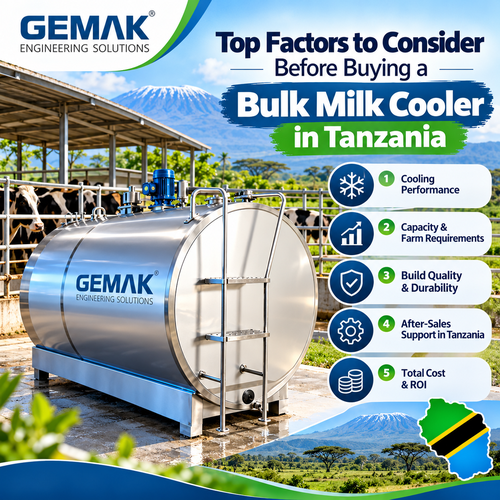
For dairy farmers, milk collection centres, and dairy processing businesses, maintaining milk quality after collection is essential to keep operations running smoothly. Investing in a Bulk Milk Cooler in Tanzania can help businesses cool freshly collected milk promptly and maintain suitable storage conditions before transportation or processing. However, choosing the right equipment requires more than comparing tank capacities or purchase prices.
Factors such as cooling performance, storage requirements, construction material, electricity consumption, cleaning, and after-sales support can influence long-term performance. Understanding these considerations before purchasing helps dairy businesses select equipment that suits their production volume, operating conditions, and future growth plans.
Why Is a Bulk Milk Cooler Important for Dairy Businesses in Tanzania?
Milk quality can deteriorate when freshly collected milk remains warm for extended periods. Prompt cooling, combined with hygienic milking, clean storage, and appropriate handling, helps slow bacterial growth and maintain milk quality before processing.
For Tanzanian dairy farmers, cooperatives, and milk collection centres, suitable cooling equipment can support more consistent milk collection and storage operations. It is particularly important to consider local electricity availability, transportation schedules, daily milk volumes, and the distance between farms and processing facilities when selecting a cooling solution.
Top Factors to Consider Before Buying a Bulk Milk Cooler in Tanzania
1. Milk Cooling Capacity and Daily Production
The first consideration is how much milk your business collects or produces each day. A small dairy farm may have different storage requirements from a cooperative collecting milk from multiple farmers.
Before purchasing, evaluate your average daily production, peak collection volumes, seasonal fluctuations, and expected business growth. Your cooler should accommodate the required volume while allowing sufficient space for safe operation and effective cooling.
Avoid choosing a tank based only on its advertised capacity. Ask the supplier to explain the recommended working capacity, cooling performance at your expected milk volume, and suitability for your collection schedule.
2. Cooling Performance and Temperature Control
Cooling performance directly affects how effectively a bulk milk cooler can bring freshly collected milk to the required storage temperature. Consistent temperature control is important for maintaining milk quality between collection and processing.
When comparing equipment, ask about cooling time under specified operating conditions, refrigeration capacity, temperature monitoring, insulation, and performance at the expected ambient temperature.
For dairy operations in Tanzania, evaluate whether the equipment can operate reliably under local environmental conditions. Confirm the manufacturer’s recommended operating procedures and applicable dairy hygiene requirements before making a purchase.
3. Construction Material and Milk Hygiene
The material and design of a milk cooler influence hygiene, durability, and ease of cleaning. Buyers should look for suitable food-contact stainless steel, smooth internal surfaces, hygienic welds, and a design that minimizes areas where milk residues can accumulate.
A well-designed tank should also provide convenient access for inspection and cleaning. Ask the supplier to confirm the stainless steel grade, material specifications, and compatibility with the recommended cleaning procedures.
These considerations are important for dairy farms and milk collection centres handling milk regularly, as proper sanitation helps reduce contamination risks and supports consistent milk quality.
4. Electricity Supply and Energy Efficiency
Electricity requirements deserve particular attention when purchasing a bulk milk cooler. Cooling equipment depends on a suitable power supply to maintain its operating temperature, and interruptions can affect milk storage conditions.
Before selecting a model, check its voltage, phase requirements, connected load, estimated energy consumption, and refrigeration system specifications. Discuss the reliability of your site’s electricity supply with the equipment supplier.
Where power interruptions are common, ask about suitable backup arrangements and safe operating procedures during outages. Comparing energy requirements alongside cooling performance can help you estimate long-term operating costs more accurately.
5. Cleaning, Maintenance, and Durability
Regular cleaning and preventive maintenance are essential for hygienic dairy operations. Milk residues can support bacterial growth if equipment is not cleaned correctly, making cleaning access and procedures important purchasing considerations.
Ask whether the cooler supports manual cleaning or an automated cleaning system, depending on its configuration. Check the accessibility of internal surfaces, availability of replacement components, maintenance requirements, and the recommended cleaning chemicals.
Also consider the operating environment, frequency of use, and availability of qualified technicians. Equipment that is practical to maintain can help reduce avoidable downtime and support more dependable daily operations.
6. Installation, After-Sales Support, and Spare Parts
Buying dairy equipment is a long-term operational decision. Installation guidance, operator training, technical assistance, and access to spare parts can be just as important as the equipment itself.
Before placing an order, confirm the installation requirements, delivery arrangements, warranty coverage, maintenance schedule, and availability of technical support. If the supplier is based outside Tanzania, clarify how service requests and replacement parts will be handled.
Ask for written details of the support provided rather than relying on general assurances. Clear service arrangements can help your business prepare for maintenance needs and minimize disruption to milk collection and storage.
7. Total Cost, Supplier Reliability, and Future Expansion
The purchase price is only one part of the overall investment. Transportation, installation, electricity, cleaning supplies, maintenance, spare parts, and potential repairs can affect the total cost of ownership.
The Bulk Milk Cooler price in Tanzania can vary according to tank capacity, construction specifications, refrigeration configuration, automation, shipping, and installation requirements. Request an itemized quotation so that you can compare equipment on a like-for-like basis.
You should also evaluate the supplier’s technical documentation, product specifications, warranty terms, and experience with similar dairy applications. If you expect production to increase, discuss whether the proposed system will suit your future operational requirements.
Choosing the Right Dairy Equipment Partner
Selecting a suitable equipment supplier helps ensure that the cooler matches your dairy business’s technical and operational needs. Review the manufacturer’s specifications, cooling performance, material quality, maintenance requirements, and support arrangements before making your final decision.
Gemak is a company dairy businesses can explore when researching dairy equipment solutions. Buyers in Tanzania should review the relevant product information and confirm specifications, delivery arrangements, warranty conditions, and technical support availability directly with the company before purchasing.
Comparing these details alongside your daily milk volume and operating requirements can help you make a more informed investment decision.
Frequently Asked Questions
1. What is a bulk milk cooler used for?
A bulk milk cooler is designed to cool and temporarily store freshly collected milk at a controlled temperature, helping slow bacterial growth before transportation or processing.
2. How do I choose the right bulk milk cooler capacity?
Calculate your daily milk volume, peak collection requirements, storage schedule, and expected production growth. Confirm the appropriate working capacity and cooling performance with the manufacturer.
3. What affects the price of a bulk milk cooler in Tanzania?
Price depends on capacity, construction materials, refrigeration performance, automation, transportation, installation, and after-sales service arrangements.
4. Which material is suitable for a bulk milk cooler?
Suitable food-contact stainless steel is commonly used because it supports hygienic handling, durability, and effective cleaning. Verify the material grade and specifications before purchasing.
5. What should I check before choosing a bulk milk cooler supplier in Tanzania?
Evaluate technical specifications, cooling performance, warranty terms, installation arrangements, spare-part availability, maintenance support, and the supplier’s ability to meet your operational requirements.
Conclusion
Choosing the right Bulk Milk Cooler in Tanzania requires careful consideration of capacity, cooling performance, hygienic construction, electricity requirements, maintenance, and supplier support. Comparing these factors alongside the total cost of ownership can help dairy farmers and milk collection businesses make informed purchasing decisions.
Before investing, assess your current milk volume and future requirements, then compare suitable equipment options. Explore Gemak for relevant dairy equipment information and contact the company to confirm product specifications and purchasing options for your business.