

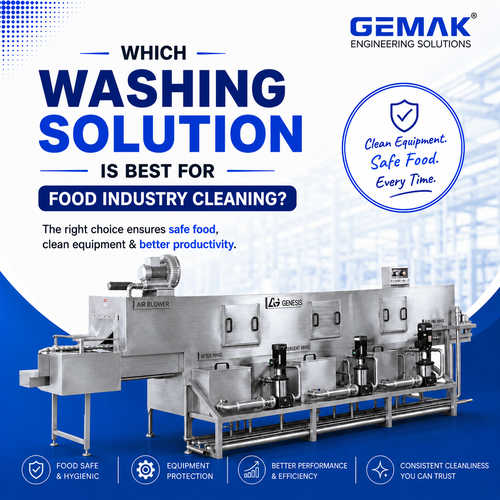
Food safety begins long before products reach consumers. Every crate, mould, tray, and food-contact surface used in food processing must be cleaned thoroughly to prevent contamination, extend product shelf life, and comply with food safety regulations. The right washing solution isn’t simply about using water or detergent—it’s about selecting an engineered cleaning system designed for your production requirements.
Modern food processing plants require automated washing systems that deliver consistent cleaning, reduce labour costs, minimize water consumption, and maintain hygienic production standards.
Why Food Industry Cleaning Is So Important
Food manufacturing environments face constant risks from:
- Bacterial contamination
- Product residue buildup
- Cross-contamination
- Biofilm formation
- Regulatory non-compliance
- Reduced product shelf life
Whether you’re processing milk, cheese, beverages, bakery products, meat, or frozen foods, every reusable container and processing component must be hygienically cleaned after every production cycle.
Automated washing systems help achieve:
- Consistent hygiene
- Faster turnaround
- Reduced manual handling
- Lower water wastage
- Improved operational efficiency
What Makes an Effective Food Industry Washing Solution?
The best washing solution combines several cleaning stages instead of relying on a single rinse.
Modern industrial washing equipment typically includes multiple cleaning phases designed to remove dirt, detergent, and residual moisture before products return to production.
A complete washing cycle generally consists of:
- Pre-pre rinse
- Pre rinse
- Hot detergent rinse
- Hot water after rinse
- Air blowing
Each stage performs a specific cleaning function that contributes to hygienic processing.
Understanding Different Washing Solutions
1. Classic Crate Washer – Best for Daily Food Processing
For most dairy and food manufacturing facilities, the Classic Crate Washer provides the most balanced cleaning solution.
The system is designed for:
- Milk crates
- Ice cream crates
- General-purpose food crates
Its cleaning sequence includes:
- Removal of loose dirt
- Nozzle spray cleaning
- Hot detergent washing
- Hot water rinsing
- Air drying
The machine is manufactured entirely from stainless steel and is available in both single-track and double-track configurations capable of handling hundreds to thousands of crates per hour with consistent cleaning quality.
This makes it ideal for:
- Dairy plants
- Beverage factories
- Bakery operations
- Food distribution centres
2. High Pressure Crate Washer – Best for Intensive Cleaning
Some production environments generate stubborn residues that require greater cleaning force.
For these applications, a High Pressure Crate Washer becomes the preferred solution.
Unlike traditional systems, this washer uses an advanced high-pressure water system that performs intensive cleaning without requiring detergent or steam for many applications.
Its three-stage process includes:
- Pre rinse
- High-pressure water rinse
- Air blowing
This design provides powerful deep cleaning while occupying minimal production floor space due to its straight-through single-track configuration.
This solution works particularly well for:
- Heavy dairy operations
- Large milk processing plants
- Ice cream manufacturing
- High-volume food factories
3. Mould Washer – Best for Precision Dairy Equipment
Cheese and dairy moulds require much higher cleaning accuracy than standard crates.
Micro-perforated moulds can easily trap:
- Milk solids
- Fat
- Protein
- Moisture
- Microorganisms
A dedicated Mould Washer that combines:
- High-pressure washing
- Hot detergent rinse
- Controlled water temperature
- High-pressure final rinse
- Air blowing
This ensures moulds exit the machine hygienically clean and production-ready.
Key Features of an Industrial Washing Solution
The best food industry cleaning systems include several engineering features that improve cleaning performance.
Stainless Steel Construction
Food-grade stainless steel provides:
- Corrosion resistance
- Easy cleaning
- Long equipment life
- Hygienic surfaces
360° Cleaning Coverage
The engineering specifications highlight 360-degree cleaning, ensuring water reaches every surface of the crate or mould rather than cleaning only exposed areas.
Controlled Water Temperature
Different washing stages use carefully controlled temperatures.
Typical detergent rinse temperatures range around 60–65°C, while after-rinse stages typically operate between 55–65°C, helping remove residues while supporting hygienic cleaning.
High Pressure Nozzles
Proper nozzle pressure ensures:
- Better dirt removal
- Reduced manual scrubbing
- Uniform cleaning
- Consistent washing performance
Air Blowing
Removing excess water is just as important as washing.
Integrated air blowing helps:
- Reduce moisture
- Minimize bacterial growth
- Speed drying
- Prepare equipment for immediate reuse
How to Choose the Best Washing Solution
Choosing the right washing solution depends on several operational factors.
Production Capacity
- Crates per hour
- Moulds per hour
- Production shifts
- Future expansion
The equipment ranges from approximately 400 to 3,000 crates per hour, allowing businesses to select systems that match their production volume.
Type of Food Product
Different industries require different washing methods.
Examples include:
| Food Industry | Recommended Washing Solution |
| Dairy | Classic Crate Washer |
| Cheese | Mould Washer |
| Ice Cream | High Pressure Crate Washer |
| Beverage | Classic Crate Washer |
Hygiene Standards
Food manufacturers should choose equipment capable of supporting:
- HACCP compliance
- GMP practices
- Food safety audits
- Consistent sanitation
Water and Energy Efficiency
Modern washing systems reduce:
- Water consumption
- Detergent usage
- Labour requirements
- Cleaning time
Benefits of Automated Food Industry Washing Solutions
Automated washing systems offer significant operational advantages over manual cleaning.
Major benefits include:
- Improved food safety
- Consistent cleaning quality
- Reduced labour costs
- Faster production turnaround
- Lower risk of contamination
- Better equipment hygiene
- Reduced operating costs
- Higher production efficiency
Why Gemak Recommends Automated Washing Solutions
For dairy and food processing facilities, Gemak understands that maintaining hygienic processing equipment is essential for delivering safe, high-quality products. Selecting the appropriate washing solution helps reduce contamination risks while improving operational efficiency across the production line.
Whether your facility requires standard crate washing, high-pressure cleaning, or precision mould washing, Gemak recommends investing in engineered washing systems that combine controlled rinsing, hot detergent cleaning, precision nozzles, and effective air drying to achieve reliable, repeatable hygiene standards.
Frequently Asked Questions
Which washing solution is best for food industry cleaning?
For most food processing facilities, automated crate washing systems with multi-stage cleaning, hot detergent rinse, hot water rinse, and air blowing provide the most effective cleaning performance.
Why is hot detergent washing important?
Hot detergent removes fats, proteins, oils, and food residues more effectively than cold water alone.
Is high-pressure washing better than detergent washing?
High-pressure washing is ideal for heavy contamination, while detergent washing is more effective for removing grease and protein residues. Many facilities use both depending on the application.
What industries use industrial washing solutions?
They are widely used in dairy, beverage, bakery, meat processing, frozen foods, cheese production, and food packaging industries.
Why is air blowing included in washing systems?
Air blowing removes excess water, speeds drying, and reduces the possibility of microbial growth before equipment is reused.
Conclusion
The best washing solution for the food industry is one that matches your production process while delivering reliable hygiene, operational efficiency, and compliance with food safety standards. Multi-stage automated systems that integrate pre-rinsing, hot detergent washing, controlled hot-water rinsing, high-pressure cleaning where needed, and air blowing provide superior cleaning performance compared with manual methods.
Whether you operate a dairy, beverage plant, cheese factory, or food processing unit, selecting the right engineered washing solution helps protect product quality, reduce operational costs, and maintain consistent sanitation. As highlighted in the washing solutions brochure, features such as stainless steel construction, 360° cleaning, controlled temperatures, high-pressure nozzles, and scalable throughput make modern washing systems a dependable choice for hygienic food manufacturing.