

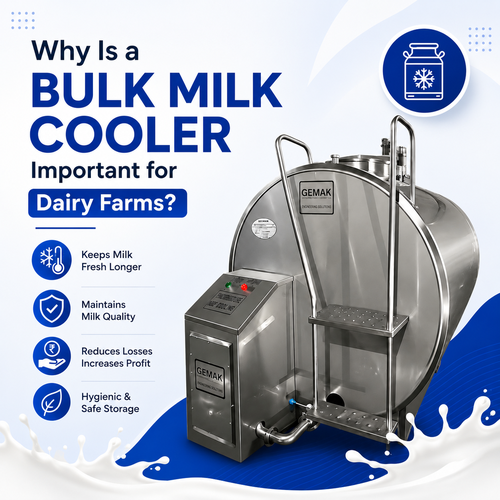
Fresh milk begins changing the moment it leaves the animal. Imagine a dairy farmer starting work at 5 AM and collecting milk from dozens of cows. Even though the milk is fresh, warm temperatures can quickly encourage bacterial growth if it is not cooled immediately. By the time the milk reaches a collection center or processing plant, its quality may already be affected. This is where a Bulk milk cooler becomes an essential part of modern dairy farming. It rapidly lowers milk temperature, helping preserve freshness, improve quality, and reduce spoilage. Whether you manage a small dairy farm or a large milk collection center, investing in the right cooling system can make a noticeable difference in profitability and customer trust.
What Is a Bulk milk cooler?
In addition to rapid cooling, a Bulk milk cooler supports efficient raw milk storage by maintaining a stable temperature until collection or processing. Modern systems combine a durable Milk storage tank, an energy-efficient dairy refrigeration system, insulated walls, and automatic temperature controls to preserve milk quality. This controlled environment helps dairy farmers minimize bacterial growth while ensuring that milk remains suitable for transportation to a milk collection centre or dairy processing plant. Proper cooling is also an important part of effective dairy farm management, especially during periods of high milk production.
Why Is a Bulk milk cooler Important for Dairy Farms?
Maintaining proper milk cooling practices is not only beneficial for preserving quality but also supports good dairy hygiene. Organizations such as the National Dairy Development Board (NDDB) and the Food Safety and Standards Authority of India (FSSAI) emphasize hygienic milk handling, rapid cooling, and safe storage practices to help maintain milk quality throughout the supply chain. While individual requirements may vary depending on the dairy operation, following recommended cooling practices contributes to safer milk production and improved consumer confidence.
Immediate Cooling Protects Milk
Fresh milk is highly perishable. Cooling it immediately after milking minimizes bacterial multiplication and helps maintain its original quality until processing.
Maintains Milk Quality
Milk that remains at the correct storage temperature retains its flavor, nutrients, and natural composition. Farmers who consistently deliver high-quality milk often build stronger relationships with buyers.
Reduces Spoilage
Without proper cooling, milk can spoil before reaching the processing plant, especially during hot weather. A Bulk milk cooler significantly lowers this risk.
Supports Food Safety
Temperature-controlled storage helps reduce contamination risks and supports hygienic milk handling practices that align with dairy industry standards.
Improves Farm Profitability
When milk quality improves, rejection rates decrease. Farmers also avoid unnecessary losses caused by spoiled milk, making cooling equipment a worthwhile long-term investment.
Real-Life Example
Consider a dairy farmer in Gujarat managing approximately 60 dairy animals. During the summer season, the cooperative frequently reported higher bacterial counts because the milk remained warm during transportation.
The farmer decided to install a Bulk milk cooler on the farm. Fresh milk was cooled to around 4°C shortly after each milking session. Within the following months, the cooperative accepted milk more consistently, spoilage became less common, and the farmer noticed improved confidence from buyers. Although the investment required planning, the improved milk handling process made day-to-day operations smoother and more reliable.
Benefits of Installing a Bulk milk cooler
Better Milk Quality
Rapid cooling preserves freshness and helps maintain the nutritional value of milk until it reaches the dairy processing facility.
Higher Income for Farmers
Quality milk is more likely to meet buyer requirements, reducing rejection and minimizing losses due to spoilage.
Lower Risk of Milk Spoilage
Temperature control is especially valuable during summer months when high ambient temperatures increase spoilage risks.
Improved Food Safety
Maintaining hygienic storage conditions helps reduce bacterial growth and supports safer milk production practices.
Reduced Transportation Losses
Properly cooled milk remains stable during transportation, giving collection vehicles more flexibility without compromising quality.
Easier Milk Collection
Milk collection centers can receive consistently cooled milk, simplifying quality control and improving overall dairy operations.
Comparison: Milk Handling Without vs. With a Bulk milk cooler
| Without Bulk milk cooler | With Bulk milk cooler |
| Higher spoilage risk | Reduced spoilage |
| Faster bacterial growth | Better milk quality |
| Shorter shelf life | Longer freshness |
| Higher chances of milk rejection | Better acceptance by buyers |
| More quality fluctuations | Consistent cooling and quality |
| Greater financial losses | Improved operational efficiency |
How to Choose the Right Bulk milk cooler
Selecting the right cooling system depends on several practical factors.
First, estimate your average daily milk production and future expansion plans. Purchasing a tank that is too small may create capacity issues as production grows, while an oversized unit may consume unnecessary energy.
Look for a durable Milk storage tank made from food-grade stainless steel that is easy to clean and resistant to corrosion. Energy-efficient refrigeration systems can help reduce electricity costs over time.
Automation features such as digital temperature monitoring, automatic cleaning options, and user-friendly controls can simplify daily operations.
Reliable manufacturers like Gemak offer dairy cooling solutions designed for different production capacities, helping farmers choose equipment that suits both current and future requirements.
Why Farmers Trust Gemak
Selecting a dependable equipment manufacturer is an important decision for any dairy business. Gemak designs dairy cooling solutions that focus on hygienic construction, durable stainless steel fabrication, energy-efficient operation, and practical usability. Their equipment is developed to support farms of different capacities, helping farmers maintain milk quality while simplifying daily operations. Features such as efficient cooling, easy cleaning, dependable after-sales support, and robust engineering make Gemak a trusted choice for modern dairy farms seeking long-term performance and operational reliability.
Common Mistakes Farmers Should Avoid
Many dairy farmers unknowingly reduce the effectiveness of their cooling systems through avoidable mistakes.
Delaying milk cooling after milking allows bacteria to multiply rapidly.
Purchasing equipment with insufficient storage capacity may create operational bottlenecks during peak production.
Ignoring regular cleaning schedules can affect milk hygiene and equipment performance.
Poor maintenance of refrigeration components may reduce cooling efficiency and increase operating costs.
Improper installation or failing to inspect compressor performance regularly can also shorten equipment lifespan.
Routine maintenance and proper operating practices help maximize the value of every Milk chilling machine installed on the farm.
Conclusion
A Bulk milk cooler is more than just a cooling tank—it is a critical investment in milk quality, food safety, and sustainable dairy farming. By rapidly cooling fresh milk, farmers can reduce spoilage, maintain nutritional value, improve buyer confidence, and streamline milk collection. Modern cooling technology also supports better dairy farm management, helping farms operate more efficiently throughout the year.
Choosing a reliable solution from manufacturers like Gemak can provide dependable performance and long-term value. Before expanding your dairy operation, take a close look at your current milk cooling process. Assess whether your existing equipment meets your production needs, maintains consistent cooling, and supports hygienic raw milk storage. A well-planned investment today can protect milk quality and strengthen your dairy business for years to come.
Frequently Asked Questions
What temperature should milk be stored in a bulk milk cooler?
Fresh milk should generally be cooled and stored at approximately 4°C. Maintaining this temperature helps slow bacterial growth while preserving freshness and overall milk quality.
How long can milk stay fresh in a bulk milk cooler?
When cooled promptly and stored hygienically at the recommended temperature, milk can remain fresh until collection or processing according to local dairy quality guidelines.
Does a bulk milk cooler improve milk quality?
Yes. Rapid cooling helps preserve freshness, reduces bacterial multiplication, and supports better milk quality throughout storage and transportation.
What size bulk milk cooler is suitable for small dairy farms?
The appropriate size depends on daily milk production, expected herd expansion, and collection schedules. Farmers should choose capacity based on current needs while allowing room for future growth.
How often should a bulk milk cooler be cleaned?
Cleaning should ideally take place after each milk collection cycle using approved dairy cleaning procedures to maintain hygiene and equipment performance.
Is investing in a bulk milk cooler worth it?
For most dairy farms, investing in a Bulk milk cooler helps reduce spoilage, improve milk quality, support food safety, and contribute to more efficient dairy operations over the long term.