

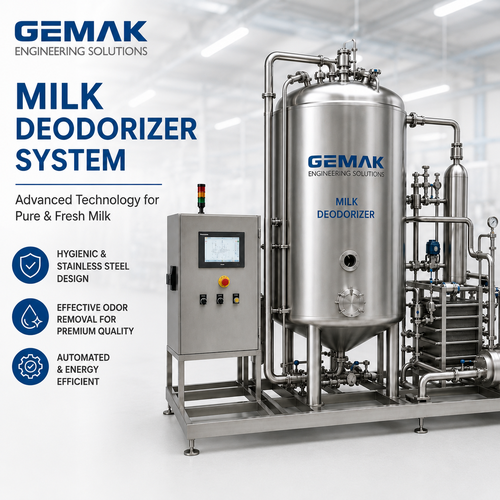
Milk is one of the most consumed food products worldwide, but maintaining its freshness, taste, and aroma can be a challenge for dairy processors. Unwanted odors in milk can develop due to feed contamination, bacterial activity, storage conditions, transportation issues, or processing inefficiencies. This is where a milk deodoriser plays a critical role.
A milk deodoriser is specialized dairy processing equipment designed to remove undesirable volatile compounds, gases, and off-flavors from milk. By eliminating these unwanted substances, dairy manufacturers can produce milk with improved taste, enhanced consumer acceptance, and longer shelf-life stability.
Why Does Milk Develop Unpleasant Odors?
Many dairy processors encounter odor-related issues that affect product quality. Common causes include:
- Feed-related flavors transferred from cattle diets
- High levels of dissolved gases
- Bacterial fermentation
- Storage tank contamination
- Transportation delays
- Environmental contamination during collection
- Oxidation reactions during processing
Even when milk meets safety standards, slight off-odors can negatively impact consumer perception and purchasing decisions.
How Does a Milk Deodoriser Work?
Milk deodorisers typically operate using a vacuum-based process. Under controlled temperature and pressure conditions, volatile compounds responsible for undesirable odors are removed from milk without affecting its nutritional value.
Basic Working Process
- Milk enters the deodorisation chamber.
- Vacuum conditions lower the boiling point of volatile compounds.
- Undesirable gases and odor-causing molecules evaporate.
- The vapors are separated and removed.
- Fresh, odor-free milk exits the system for further processing.
This process ensures that the natural flavor profile of milk remains intact while eliminating unwanted sensory characteristics.
Technical Specifications of a Typical Milk Deodoriser
| Parameter | Typical Range |
| Processing Capacity | 1,000–50,000 LPH |
| Operating Temperature | 65°C–85°C |
| Vacuum Pressure | 600–700 mm Hg |
| Product Type | Raw Milk, Pasteurized Milk |
| Material of Construction | SS 304 / SS 316 |
| Automation Level | Semi-Automatic / Fully Automatic |
| CIP Compatibility | Yes |
| Energy Efficiency | High |
The actual specifications may vary depending on plant capacity and production requirements.
Key Benefits of Using a Milk Deodoriser
1. Improved Milk Taste
Consumers are highly sensitive to taste variations. Removing off-flavors helps maintain a clean and natural milk taste.
2. Better Consumer Satisfaction
Milk with consistent sensory quality leads to higher customer retention and brand loyalty.
3. Enhanced Product Quality
Deodorisation improves the overall sensory profile of milk and dairy products.
4. Supports Premium Product Positioning
High-quality milk can command better market pricing and strengthen brand reputation.
5. Reduced Product Rejections
Retailers and distributors are less likely to reject products with consistent quality standards.
Real Industry Example
A medium-sized dairy processing plant in North India was experiencing customer complaints regarding a slight feed-like odor in packaged milk during summer months.
After installing a milk deodorisation system:
- Customer complaints reduced significantly.
- Product consistency improved.
- Retail acceptance increased.
- Repeat purchases showed noticeable growth.
- The dairy successfully expanded distribution into new markets.
This example demonstrates how odor control directly impacts customer satisfaction and business growth.
Applications of Milk Deodorisers
Milk deodorisers are widely used in:
- Dairy processing plants
- Milk chilling centers
- Pasteurization units
- Milk powder manufacturing facilities
- Cheese production plants
- Ice cream manufacturing units
- Dairy ingredient processing plants
Factors to Consider Before Purchasing a Milk Deodoriser
Investing in dairy processing equipment requires careful evaluation.
Capacity Requirements
Choose equipment that matches your production volume without creating bottlenecks.
Energy Consumption
Efficient systems reduce operational costs and improve profitability.
Automation Features
Modern systems offer PLC controls, automated monitoring, and easier operation.
Material Quality
Food-grade stainless steel construction ensures hygiene and durability.
Service Support
Reliable technical support and spare parts availability are essential for long-term performance.
Compliance Standards
Ensure the equipment complies with dairy industry quality and safety standards.
Why Modern Dairy Plants Are Investing in Advanced Deodorisation Systems
Consumer expectations have evolved significantly. Today’s customers expect milk products that are:
- Fresh
- Clean tasting
- Consistent
- Safe
- High quality
As competition increases, dairy processors must adopt technologies that improve product quality while maintaining operational efficiency.
Advanced milk deodorisation systems help achieve these goals by enhancing sensory quality and reducing the risk of flavor-related complaints.
Manufacturers such as Gemak provide advanced dairy processing solutions designed to help processors maintain high product standards while optimizing production efficiency.
Expert Insights: What Dairy Professionals Say
Industry experts agree that sensory quality has become one of the most important factors influencing consumer purchasing decisions.
When consumers open a milk package, aroma is often their first quality indicator. Even minor odor issues can influence perceptions of freshness and quality.
A properly designed deodorisation process helps dairy plants maintain consistency across batches and seasons, ensuring a superior customer experience.
This is particularly important for large-scale operations where maintaining uniform product quality can be challenging.
The Future of Milk Deodorisation Technology
The dairy industry continues to move toward:
- Greater automation
- Improved energy efficiency
- Smart process monitoring
- Enhanced hygiene standards
- Sustainable processing technologies
Companies such as Gemak are contributing to these advancements by developing innovative dairy processing equipment that meets modern industry requirements.
As dairy consumption continues to grow globally, deodorisation technology will remain an important component of quality-focused milk processing operations.
FAQs
1. What is a milk deodoriser used for?
A milk deodoriser removes unwanted odors, gases, and volatile compounds from milk to improve taste, aroma, and overall product quality.
2. Does a milk deodoriser affect milk nutrition?
No. When operated correctly, deodorisation removes odor-causing compounds without significantly affecting the nutritional composition of milk.
3. Can a milk deodoriser improve shelf life?
While deodorisation primarily improves sensory quality, it can contribute to better product stability when integrated with proper dairy processing practices.
4. Is milk deodorisation necessary for all dairy plants?
Not always. However, dairies experiencing odor-related quality issues or seeking premium product quality often benefit significantly from deodorisation systems.
5. How do I choose the right milk deodoriser?
Consider processing capacity, automation level, energy efficiency, material quality, hygiene requirements, and after-sales support before making a purchasing decision.
Conclusion
A milk deodoriser is an essential quality-enhancement solution for modern dairy processing facilities. By removing unwanted odors and volatile compounds, it helps improve milk taste, consumer satisfaction, and product consistency.
For dairy processors looking to strengthen product quality, reduce customer complaints, and enhance brand reputation, investing in an advanced milk deodorisation system can provide significant long-term value. As market competition grows and consumers become increasingly quality-conscious, deodorisation technology is becoming a key component of successful dairy operations.