

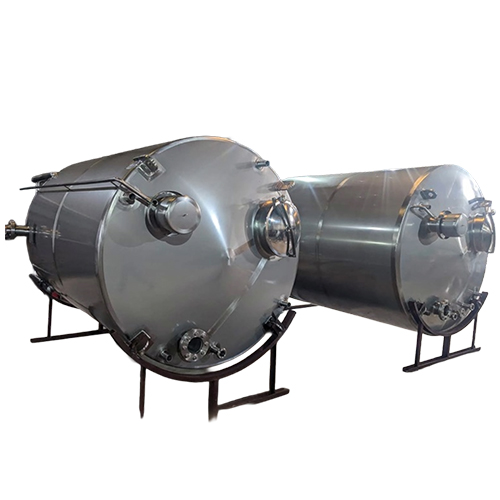
Milk is a very perishable food that requires high hygiene, temperature and storage conditions since the time it is collected up to the processing or packaging process. Even slight hits in the quality of storage in commercial dairies may lead to the growth of bacteria, spoilage, loss of money and the violation of the regulation. This is why the choice of the appropriate storage system is a decisive choice of the dairy operators.
Stainless Steel Milk Storage Tank is generally considered as the most efficient item in preserving the freshness, quality and safety of milk. They are made to food-grade standards and offer a hygienic environment which facilitates temperature control, easy cleaning and long-term durability. Stainless steel tanks are important in the commercial dairies, milk collection centers and processing plants to ensure a continuous operation and quality milk.
This blog will discuss all that commercial dairies should know about the best Stainless Steel Milk Storage Tank type, its advantages, characteristics, standards, maintenance procedures and buying issues.
What Is a Stainless Steel Milk Storage Tank
Stainless steel Milk Storage Tank is a tank that is used to store raw or processed milk in a hygienic way. It is made of food grade stainless steel to avoid contamination, corrosion and chemical reaction which may affect the quality of milk.
These tanks are designed in such a way that they can keep the milk with temperatures that are normally between 2C and 4C, which retard the growth of bacteria and also preserve the freshness. In the tanks there are insulations and agitators to provide even-temperature distribution to all the milk that is stored there.
Commercial dairy setting, a Stainless Steel Milk Storage Tank serves as a pivotal point between milk picking and subsequent processing which makes sure that the milk is not contaminated, spoiled, or non-conforming to food safety regulations.
Importance of Proper Milk Storage in Commercial Dairies
Milk is very vulnerable to temperature variation, contamination and air exposure. Inadequate storage may result in quick spoilage, off flavors and microbial proliferation. This is the reason why the quality storage systems are a priority of commercial dairies.
The Milk Storage Tank made of Stainless steel assists in keeping the milk intact by giving it a clean, germ free environment. The surfaces made of stainless steel are not porous and as such, bacteria cannot settle in the metal. Milk is also insulated and cooled properly to avoid the changes in temperature.
Also, the regulatory bodies provide strong hygienic and storage factors of dairy products. A compliant Stainless Steel Milk Storage Tank can assist commercial milk dairies with food safety laws, ensure certification and prevent fines and recalls.
Why Stainless Steel Is the Preferred Material
Dairy storage has adopted stainless steel which has proven to be a superior material in the industry. Stainless Steel Milk Storage Tank is a great resistant to corrosion, despite the existence of milk acids, cleaning chemicals, and moisture.
Stainless steel has a smooth surface finish which eliminates the accumulation of residue and is therefore easy to clean and comes in handy in food grade usage. Stainless steel does not pick up odors, flavors like plastic or mild steel, which means that milk is not contaminated.
Another distinctive strength is durability. Maintained Stainless Steel Milk Storage Tank has a long life span of decades and offers long term value and dependability to the commercial dairies.
Types of Stainless Steel Milk Storage Tank
A Stainless Steel Milk Storage Tank comes in various types to satisfy the needs of the particular requirements of commercial dairies, milk collection centers and processing plants. The types are all meant to have a specific storage capacity, space availability.
Vertical Milk Storage Tank
This is the best type to be used in facilities whose floor space is limited. It enables a large storage capacity in a small space and is normally applied in dairy processing plant where space of operation is a factor.
Horizontal Milk Storage Tank
Horizontal tanks are used as they are simple to install and maintain. They are common in the milk collection facilities and large scale dairies where accessibility and ease of cleaning is paramount.
Bulk Milk Storage Tank
Bulk tanks are used in large-volume storage of milk, so they can be installed in commercial dairies and large dairy farms. They facilitate the sustained operations and large volume of milk per day.
Key Features Of Stainless Steel Milk Storage Tank
When selecting a Stainless Steel Milk Storage Tank, commercial dairies should evaluate several critical features.
Capacity is the first consideration. Tanks are available in various sizes to match daily milk intake and future expansion plans.
Insulation quality plays a vital role in temperature stability. High-grade insulation reduces cooling costs and prevents temperature fluctuations.
Agitators ensure uniform temperature and prevent cream separation. Proper drainage design allows complete emptying and easy cleaning.
Surface finish and welding quality are equally important. A premium Stainless Steel Milk Storage Tank features smooth welds and polished interiors to prevent bacterial growth.
Manufacturing Standards and Quality Certifications
The Stainless Steel Milk Storage Tank should have high quality to meet the food safety and dairy industry standards. The tanks are usually produced with SS 304 or SS 316 grades that are characterized by resistance to corrosion and by being hygienic.
Precise welding, polishing, are also part of the manufacturing processes so that it can be leakproof. The tank is safe to store the milk in the long term because of compliance with the dairy regulations and international quality standards.
Benefits of Using a Stainless Steel Milk Storage Tank
- One of the biggest advantages of a Stainless Steel Milk Storage Tank is its ability to maintain strict hygiene. The smooth internal surface prevents residue buildup and supports safe milk storage conditions.
- Stainless steel is a non-reactive material, which means the milk retains its natural taste, aroma, and nutritional value throughout the storage period.
- The material offers strong resistance to corrosion, moisture, and chemicals used during regular dairy cleaning cycles, ensuring long-term reliability.
- Cleaning becomes faster and more effective due to compatibility with automated CIP systems, helping commercial dairies save time and labor costs.
- A Stainless Steel Milk Storage Tank minimizes milk spoilage and operational losses by creating a controlled and sealed storage environment.
- Long service life makes these tanks suitable for continuous commercial use without frequent repairs or replacements.
- Energy efficiency improves when stainless steel tanks are combined with proper insulation, helping dairies control operational expenses.
- These tanks support regulatory compliance, making them ideal for dairies supplying to organized retail and export markets.
- Stainless steel is environmentally responsible and recyclable, aligning with sustainable dairy practices.
- The robust design ensures safe storage of large milk volumes, supporting business scalability.
- Overall, investing in a Stainless Steel Milk Storage Tank delivers consistent performance, reduced risks, and long-term value for modern commercial dairies.
Difference Between Stainless Steel and Other Storage Materials
| Feature / Property | Stainless Steel Milk Storage Tank | Plastic Tank | Mild Steel Tank |
| Hygiene & Safety | Smooth, non-porous surface; prevents bacterial growth | Can harbor bacteria over time | Prone to rust and bacterial contamination |
| Durability | Highly durable, corrosion-resistant, long-lasting | Can crack or warp over time | Rusts easily, shorter lifespan |
| Temperature Control | Retains temperature efficiently; maintains milk freshness | Poor insulation; uneven cooling | Limited cooling efficiency |
| Chemical Resistance | Resistant to cleaning chemicals and acids | May react with certain chemicals | Corrodes with acids and detergents |
| Taste & Quality Preservation | No effect on milk taste, smell, or nutrition | May alter milk taste over time | Can affect flavor due to rust |
| Maintenance & Cleaning | Easy cleaning; compatible with CIP systems | Stains easily; harder to sanitize | Requires frequent maintenance |
| Longevity & Cost-Effectiveness | High initial cost but low long-term cost; lasts decades | Low initial cost but frequent replacement | Medium initial cost but higher maintenance cost |
| Regulatory Compliance | Meets international dairy and food safety standards | Often limited compliance | May not meet strict standards |
Applications in Commercial Dairy Operations
This is a Stainless Steel Milk Storage Tank that finds application in various dairy applications.
Milk collection centers drag on tanks which are used to store milk temporarily prior to transport. They are used by processing plants to store the milk in the stages of pasteurization and production.
Manufacturers of cheese, butter, yogurt, and ice cream rely on stainless steel tanks to ensure the consistency of quality of raw materials. These tanks are also used in large scale dairy farms, as storage means.
Maintenance and Cleaning Best Practices
Proper maintenance ensures optimal performance of a Stainless Steel Milk Storage Tank. Most commercial dairies use CIP (Clean-in-Place) systems for automated cleaning, which reduce manual handling and ensure consistent sanitation. Regular inspections help detect leaks, gasket wear, valve issues, or insulation damage before they affect milk quality. Using approved cleaning chemicals and following scheduled maintenance routines extends tank life and maintains hygiene standards.
In addition, monitoring temperature sensors, agitator performance, and minimum temperature efficiency is essential for reliable operation. Periodic polishing of internal surfaces helps preserve smooth finishes and prevents residue buildup. Keeping detailed maintenance records supports compliance with food safety regulations and improves operational planning. A well-maintained Stainless Steel Milk Storage Tank minimizes downtime, reduces contamination risks, and ensures uninterrupted dairy operations
Choosing the Right Capacity for Your Dairy Business
Selecting the right tank capacity depends on daily milk volume, collection frequency, and processing timelines.
Underestimating capacity can lead to overflow risks, while oversized tanks increase energy costs. A proper capacity of Stainless Steel Milk Storage Tank supports efficient operations and future growth.
Common Mistakes to Avoid While Purchasing
Most dairies keep their interest down to price and have neglected such important aspects as insulation quality, index of materials, and even after sales services.
Living with these aspects may result in increased maintenance costs and decreased performance. The selection of a good Stainless Steel Milk Storage Tank manufacturer will mean long term reliability.
Cost Factors and Investment Considerations
A Stainless Steel Milk Storage Tank is determined by price according to the capacity, insulation, automation, and grade of material.
Stainless steel tank can be cost effective since the initial cost might be more as compared to other materials, but the maintenance costs, energy consumption and quality of the product will save a lot in the long run.
Why Commercial Dairies Prefer Stainless Steel Tanks
- Offers better hygiene including a smooth, non-porous, food grade surface preventing any build-up of bacteria.
- Preservation- Prevents chemical reaction, absorption of odor, or flavor contamination flattening the milk.
- Guarantee that dairy and food safety standards are adhered to both in-country and internationally.
- Is very resistant to corrosion, moisture, and cleaning dairy chemicals.
- Aids in maintaining a steady temperature that contributes to the extension of the freshness of milk in longer periods.
- Apposite with sustained and large-volume activities typical of commercial dairies.
- Minimizes product loss through minimizing spoilage and contamination risks.
- Easy and effective cleaning by CIP (Clean-in-Place) systems.
- Provides extended lifecycle, usually decades in case of appropriate maintenance.
- Reduces the long-term operation and maintenance expenses although the initial investment is more.
- Improves the energy use when together with good insulation and cooling network.
- Favors sustainability objectives because of recyclability of stainless steel.
- Withstands even severe production conditions.
- Enhances performance through the adoption of automated dairy systems.
- Develops confidence with buyers and regulators by use of a tested Stainless Steel Milk Storage Tank.
Frequently Asked Questions (FAQs)
What is the ideal capacity for a commercial dairy tank?
The ideal capacity depends on daily milk collection volume and processing schedules. Commercial dairies should choose a Stainless Steel Milk Storage Tank that accommodates peak loads with buffer capacity.
How long can milk be safely stored in a stainless steel tank?
When stored at recommended temperatures, milk can be safely stored for 24 to 48 hours in a Stainless Steel Milk Storage Tank.
Which stainless steel grade is best for milk storage?
SS 304 is commonly used, while SS 316 offers higher corrosion resistance for demanding environments.
Are stainless steel milk storage tanks easy to clean?
Yes, smooth surfaces and CIP systems make a Stainless Steel Milk Storage Tank easy to clean and sanitize.
How does insulation improve milk quality?
Insulation minimizes temperature fluctuations, preserving milk freshness and reducing bacterial growth.
Conclusion
The choice of the appropriate Stainless Steel Milk Storage Tank is an important investment in the commercial dairy, directly linked to product quality, safety, and operational efficiency. Stainless steel tanks are the most reliable in maintaining milk freshness and meeting regulatory requirements, while also being highly cost-effective in terms of long-term value. Awareness of the type of tanks, their characteristics, care, and upkeep, as well as cost considerations, enables dairy operators to make well-informed decisions that support sustainable growth.
A properly designed Stainless Steel Milk Storage Tank is a key factor in ensuring milk quality and enhancing the performance and profitability of today’s highly competitive dairy industry. Partnering with Gemak Engineering Solutions ensures access to expert guidance, high-quality tanks, and reliable solutions tailored to modern commercial dairy requirements.