

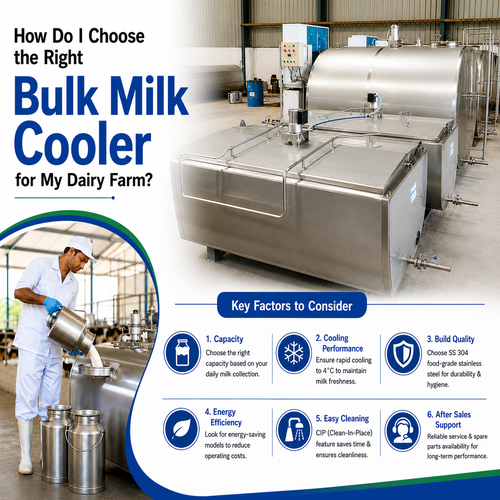
Choosing the right Bulk milk cooler is one of the most important decisions for any dairy farmer. A well-planned investment helps maintain fresh milk, reduces bacterial growth, and improves overall profitability. On the other hand, selecting the wrong cooling capacity or an unsuitable model can increase operating costs and affect the quality of milk delivered to buyers or processing plants.
In the first part of this blog series, we discussed why rapid milk cooling is essential for preserving fresh milk after milking. Now, in Part 2, we’ll focus on how to select the right cooling solution based on your farm’s requirements. Whether you’re starting a new dairy business or upgrading your existing Milk cooling system, understanding the right selection criteria can save both time and money in the long run.
Why Choosing the Right Bulk milk cooler Matters
A Bulk milk cooler is much more than a storage unit. It plays a vital role in preserving Milk quality by reducing the temperature of fresh milk quickly after collection. Proper cooling slows bacterial growth, helps retain nutritional value, and ensures the milk meets quality standards expected by dairy cooperatives and processing companies.
For dairy farmers, choosing the correct equipment is also a long-term business decision. An appropriately sized cooling unit reduces energy waste, minimizes maintenance costs, and supports consistent daily operations. Investing in reliable Dairy farm equipment today can help avoid unnecessary replacement costs in the future.
Modern dairy farms also consider factors such as energy efficiency, ease of cleaning, and long-term durability before making a purchase. Manufacturers like Gemak offer solutions designed to meet different farm capacities, but the ideal choice always depends on the specific needs and future growth plans of each dairy operation.
Understand Your Daily Milk Production
Before comparing different models, calculate the average quantity of milk your farm produces each day. This is the most important factor when selecting the right Milk storage tank capacity. Your choice should not only meet today’s production but also support expected growth over the next few years.
As a practical guideline, many dairy farms use the following capacities based on their average daily milk production:
| Average Daily Milk Production | Recommended Bulk Milk Cooler Capacity |
| Up to 500 litres/day | 1000 L |
| 1000 litres/day | 2000 L |
| 2500 litres/day | 5000 L |
These recommendations may vary depending on the number of milk collections per day, storage duration, and future expansion plans. Selecting the right capacity helps reduce unnecessary operating costs while ensuring efficient milk handling.
7 Key Factors to Consider Before Buying a Bulk milk cooler
Selecting the right Bulk milk cooler is about more than just choosing a storage capacity. A well-informed decision considers your current production, future expansion, operating costs, and equipment reliability. Here are the seven most important factors every dairy farmer should evaluate before making a purchase.
1. Match the Capacity to Your Daily Milk Production
Start by calculating the average quantity of milk collected each day. Choose a cooler that comfortably handles your current production while allowing some room for seasonal fluctuations. For example, if your farm produces around 500 litres daily, selecting a 1,000-litre unit is generally more practical than an 500-litre unit, as it provides operational flexibility.
2. Plan for Future Expansion
Many dairy farms gradually increase the number of animals or improve milk yield over time. Purchasing equipment based only on current production may lead to another investment within a few years. If you expect your dairy business to grow, choose a Milk storage tank that can support future production without significantly increasing operating costs.
3. Evaluate Cooling Performance
One of the primary functions of a Milk cooling system is to cool freshly collected milk quickly to the recommended storage temperature. Faster cooling helps reduce bacterial growth and preserves freshness, taste, and nutritional value. Always check the cooling performance specifications rather than focusing only on storage capacity.
4. Consider Energy Efficiency
Electricity is a recurring operating expense for every dairy farm. An energy-efficient cooling unit with quality insulation and a reliable compressor can significantly reduce monthly electricity bills. Although highly efficient equipment may require a slightly higher initial investment, it often provides better long-term savings.
5. Check the Build Quality
A high-quality Bulk milk cooler should be manufactured using food-grade stainless steel that resists corrosion and is easy to clean. Durable construction not only improves hygiene but also increases the lifespan of the equipment, making it a better long-term investment.
6. Look for Easy Cleaning and Maintenance
Regular cleaning is essential for maintaining Milk quality and meeting dairy hygiene standards. Choose equipment designed for easy washing and inspection. Systems with efficient cleaning mechanisms reduce labour, save water, and help maintain consistent milk hygiene throughout the year.
7. Don’t Ignore After-Sales Service
Reliable technical support is just as important as the machine itself. Before making a purchase, verify the availability of spare parts, maintenance services, and warranty support in your region. Quick service response can minimize downtime during peak milk production periods.
Real-World Example
Planning for Growth Saves Money
A dairy farmer in Maharashtra started with 18 milking cows and an average production of around 500 litres of milk per day. To minimize the initial investment, the farmer purchased a 1000-litre Bulk milk cooler.
Within three years, the herd expanded to more than 35 animals, increasing daily milk production to approximately 1000 litres. The existing cooler was no longer sufficient, resulting in milk being stored in multiple containers while waiting for collection. This created additional handling, increased labour, and eventually required the purchase of a new 2000-litre unit.
If the farmer had considered future expansion during the initial purchase, the additional replacement cost, installation expenses, and operational disruptions could have been avoided. This example highlights why long-term planning is just as important as current production when selecting dairy equipment.
Common Mistakes Farmers Make When Buying a Bulk milk cooler
Based on common challenges faced across the dairy industry, farmers should avoid these mistakes:
- Purchasing equipment based only on the lowest price rather than long-term value.
- Choosing a capacity that only matches current production without considering future herd expansion.
- Ignoring electricity consumption and overall operating costs.
- Not verifying whether the equipment is made from food-grade stainless steel.
- Overlooking the availability of local service engineers and spare parts.
- Failing to compare warranty coverage and maintenance requirements.
- Neglecting regular cleaning schedules, which can affect Milk quality.
- Buying equipment without evaluating the reputation and technical support of the manufacturer.
Avoiding these mistakes can improve equipment performance, reduce maintenance costs, and extend the operational life of your investment.
Quick Buying Checklist
Before finalizing your purchase, ask yourself the following questions:
✔ Does the capacity match my current and future milk production?
✔ Can the equipment cool milk quickly and consistently?
✔ Is it manufactured using food-grade stainless steel?
✔ Is the machine energy efficient?
✔ Is the cleaning process simple and hygienic?
✔ Are spare parts and technical support easily available?
✔ Does the manufacturer provide a good warranty?
✔ Will this investment support my dairy farm for the next 5–10 years?
If your answer is “Yes” to all of these questions, you’re likely making a smart investment.
Frequently Asked Questions
1. What size Bulk milk cooler do I need?
The ideal size depends on your average daily milk production and expected business growth. It’s generally recommended to choose a capacity that accommodates both current output and future expansion.
2. How quickly should a Milk cooling system cool fresh milk?
Efficient cooling systems are designed to reduce milk temperature rapidly after collection, helping preserve freshness and minimize bacterial growth in accordance with dairy industry best practices.
3. Why is stainless steel important in a milk cooler?
Food-grade stainless steel is corrosion-resistant, easy to clean, and helps maintain hygiene. It also increases the durability and service life of the equipment.
4. Should I buy a larger cooler for future expansion?
If you plan to increase your herd size or milk production within the next few years, choosing a slightly larger capacity can be more economical than replacing the equipment later.
5. How long does a Bulk milk cooler typically last?
With proper installation, routine maintenance, and regular cleaning, a quality Bulk milk cooler can provide reliable performance for many years.
Industry Standards and Best Practices
When selecting a Bulk milk cooler, it is beneficial to consider recommendations and food safety guidelines issued by recognized organizations within the dairy industry. These organizations provide valuable information on milk hygiene, storage practices, and quality standards.
- The National Dairy Development Board (NDDB) publishes technical guidance on milk collection, chilling infrastructure, and efficient dairy management practices in India.
- The Food Safety and Standards Authority of India (FSSAI) establishes food safety and hygiene regulations to help ensure milk remains safe throughout storage and transportation.
- The Food and Agriculture Organization (FAO) provides internationally recognized best practices for milk handling, cooling, and quality preservation that are widely followed by dairy professionals.
Referring to these recommendations alongside your farm’s production goals can help you make a more informed and sustainable investment decision.
Conclusion
Choosing the right Bulk milk cooler is a long-term investment that directly impacts Milk quality, operational efficiency, and overall profitability. Instead of focusing only on the purchase price, dairy farmers should evaluate cooling performance, storage capacity, energy efficiency, build quality, maintenance requirements, and after-sales support.
By carefully assessing both your current production and future expansion plans, you can invest in equipment that supports sustainable business growth while reducing unnecessary operating costs. Many dairy businesses also compare trusted manufacturers such as Gemak when evaluating reliable milk cooling solutions for long-term performance.
Making an informed decision today can help protect your milk, improve productivity, and deliver better returns for years to come.