

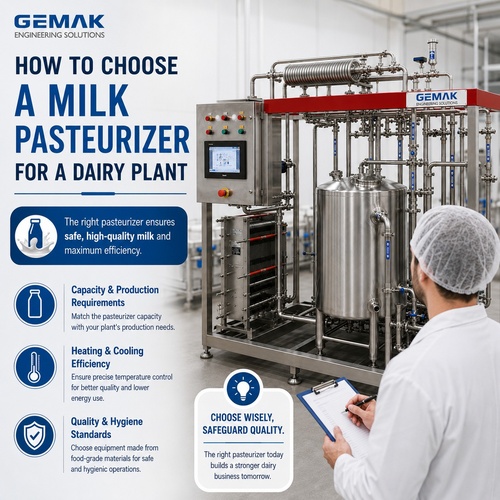
Milk pasteurization is one of the most critical processes in dairy manufacturing. The right pasteurizer ensures food safety, extends shelf life, maintains milk quality, and improves operational efficiency. However, with various technologies, capacities, and automation levels available, choosing the ideal milk pasteurizer for a dairy plant can be challenging.
This guide explains the key factors dairy owners, plant managers, and dairy entrepreneurs should consider before investing in a milk pasteurization system.
Why Is a Milk Pasteurizer Important?
A milk pasteurizer heats milk to a specific temperature for a predetermined time to eliminate harmful microorganisms while preserving nutritional value and taste.
Benefits of milk pasteurization include:
- Improved food safety
- Extended product shelf life
- Regulatory compliance
- Better product consistency
- Reduced spoilage losses
- Enhanced consumer confidence
Whether you operate a small dairy farm, milk collection center, or large processing plant, selecting the right pasteurizer directly impacts production efficiency and product quality.
Understanding Different Types of Milk Pasteurizers
1. Batch Pasteurizer
Batch pasteurizers heat a fixed quantity of milk in a tank and hold it at the required temperature before cooling.
Best for:
- Small dairy plants
- Pilot production units
Advantages:
- Lower initial investment
- Simple operation
- Suitable for multiple dairy products
2. HTST Pasteurizer (High Temperature Short Time)
HTST systems rapidly heat milk to approximately 72°C for 15 seconds before cooling.
Best for:
- Medium to large dairy plants
- Continuous milk processing
Advantages:
- High efficiency
- Reduced processing time
- Better energy utilization
- Consistent product quality
3. UHT Pasteurizer (Ultra High Temperature)
UHT technology processes milk at very high temperatures for a few seconds, creating long shelf-life products.
Best for:
- Large-scale commercial dairies
- Packaged milk brands
Advantages:
- Extended shelf life
- Reduced cold chain dependence
- Large production capacity
Key Factors to Consider When Choosing a Milk Pasteurizer
1. Daily Milk Processing Capacity
The first consideration is your daily milk volume.
Ask yourself:
- How many liters of milk are processed daily?
- What is the projected growth over the next 5 years?
- Will production increase seasonally?
Selecting a system with slightly higher capacity than current demand helps accommodate future expansion without immediate upgrades.
2. Type of Dairy Products
Different dairy products may require different processing conditions.
Consider whether you produce:
- Pasteurized milk
- Flavored milk
- Yogurt
- Curd
- Cheese
- Cream
- Ice cream mix
A versatile pasteurization system supports multiple product lines and improves return on investment.
3. Energy Efficiency
Energy costs significantly impact dairy profitability.
Look for features such as:
- Heat recovery systems
- Regenerative heat exchangers
- Insulated processing tanks
- Variable frequency drives (VFDs)
- Energy-efficient pumps
Modern HTST pasteurizers can recover a large portion of heat energy, reducing operational costs substantially.
4. Automation Level
Automation improves consistency and reduces human error.
Important automation features include:
- PLC control systems
- Touchscreen HMI interfaces
- Automatic temperature monitoring
- CIP integration
- Data logging capabilities
- Remote monitoring systems
Smart dairy plants increasingly prefer automated pasteurizers that support Industry 4.0 and digital quality control practices.
5. Food Safety Compliance
Food safety should never be compromised.
Ensure the pasteurizer complies with:
- FSSAI guidelines
- ISO standards
- HACCP requirements
- GMP practices
- Dairy industry regulations
Proper validation and temperature control mechanisms are essential for regulatory compliance.
6. Cleaning and Maintenance Requirements
Downtime can negatively affect dairy operations.
Choose systems with:
- Easy-to-clean designs
- Automatic CIP (Clean-In-Place) systems
- Stainless steel construction
- Accessible maintenance points
- Reliable spare parts availability
Efficient cleaning systems improve hygiene while reducing labor costs.
7. Material and Build Quality
The construction quality directly impacts equipment lifespan.
Look for:
- Food-grade stainless steel
- Corrosion-resistant components
- Hygienic welding standards
- Durable heat exchangers
- High-quality valves and pumps
Premium materials ensure long-term reliability and lower maintenance expenses.
8. Cooling Integration
Pasteurization and cooling work together to preserve milk quality.
Consider whether the system integrates with:
- Bulk Milk Coolers
- Chilling systems
- Glycol cooling units
- Refrigeration systems
- Cold storage infrastructure
Efficient cooling minimizes bacterial growth after pasteurization.
Cost vs Value: What Should You Prioritize?
Many dairy owners focus only on purchase price, but total cost of ownership is more important.
Evaluate:
- Initial equipment cost
- Energy consumption
- Maintenance expenses
- Downtime risks
- Product yield
- Equipment lifespan
A slightly higher upfront investment in an efficient and reliable pasteurizer often delivers better profitability over time.
Essential Features Checklist
Before finalizing a milk pasteurizer, verify the following:
✔ Appropriate processing capacity
✔ Food-grade stainless steel construction
✔ Automatic temperature control
✔ Energy-efficient design
✔ CIP compatibility
✔ Data recording and monitoring
✔ Regulatory compliance
✔ Reliable service support
✔ Expansion capability
✔ Efficient cooling integration
Frequently Asked Questions
What size milk pasteurizer do I need for my dairy plant?
The required size depends on your daily milk processing volume, future expansion plans, and production schedule. Always choose a capacity that accommodates projected growth.
Which pasteurizer is best for a medium-sized dairy plant?
HTST pasteurizers are typically the preferred choice for medium-sized dairy plants because they offer continuous processing, energy efficiency, and consistent product quality.
How important is automation in milk pasteurization?
Automation improves process consistency, food safety, traceability, and operational efficiency while reducing manual intervention and human error.
What material should a milk pasteurizer be made from?
Food-grade stainless steel is the industry standard due to its durability, hygiene, corrosion resistance, and compliance with food safety regulations.
Does a milk pasteurizer require a CIP system?
Yes. A Clean-In-Place (CIP) system improves sanitation, reduces cleaning time, ensures compliance, and enhances operational efficiency.
How can I reduce operating costs in milk pasteurization?
Choose energy-efficient pasteurizers with heat recovery systems, automation controls, insulated tanks, and optimized cooling systems to lower long-term operating expenses.