
Hygiene in the current industrial setting is not only a regulatory policy but also a vital operation determinant affecting the quality of products, safety and brand identity. Food and dairy, pharmaceutical, logistical industries, and many others rely on clean handling systems to prevent contamination and operational hazards. Unhealthy habits of sanitation may result in product recall, health risk, and loss of money.
The transport and storage crates have always been a challenge to industries that required manual cleaning. It involves serious work, it uses a lot of water and in many cases it does not give the same results. The laborers can fail to reach difficult to access areas and different cleaning approaches cause disparities in the level of cleanliness. These have been restrictive to the extent that industries have been forced to seek viable solutions that are consistent and efficient.
Industrial cleaning practices have been changed by the emergence of automated washing solutions. The high level of hygiene, controlled use of water and the uniform washing is guaranteed by advanced machines. Crate Washer is a critical solution to any industry that wants to clean its products fast, safely, and in a standard manner.
Gemak Engineering Solutions is a prominent company that is involved in the production of strong industrialized gear to address the current hygienic issues. Using an approach of creating systems that are precise and comply with industry standards, the company has provided clean systems that assist businesses to stay clean besides enhancing productivity through automated systems such as Crate Washer.
What Is a Crate Washer
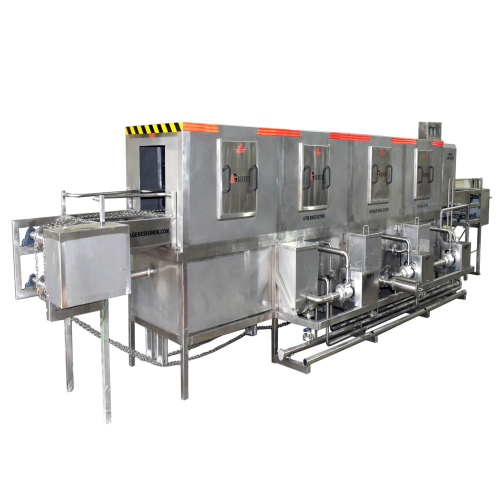
Crate Washer is an industrial cleaning device that is capable of washing, rinsing and sanitizing crates that are used in handling and storing materials. It is essential in a way that the reusable crates are kept hygienic, safe, and not contaminated before they re-enter into the production or supply chain. These machines remove the irregularities of manual cleaning as it offers controlled and repeatable washing cycles.
Food processing, dairy, pharmaceutical, and logistics are some of the industries that have to use crates daily. The crates used in food and dairy industries transport raw materials and finished products whose high hygienic standards must be observed. Crate is used in transportation of sensitive products that require cleanliness in the pharmaceutical and chemical industries. The clean crates are also vital in operations of logistics and warehousing as a way of ensuring high efficiency in the operations.
Consistency and efficiency is the huge difference between manual cleaning and automated systems. Hand-oriented methods require manual labor, and thus are not quick and dependable. Conversely, Crate Washer offers standardized cleaning with high-pressure sprays, temperature regulation, and accurate addition of detergents to make sure that all crates are clean.
These systems are necessary in the case of modern production units. Automation is needed due to the high output requirements, compliance with regulations, and cost efficiency. Crate Washer helps in sustaining processes, minimizing inconveniences, and ensures a high level of sanitation that cannot be ensured through manual cleaning. When the industries are increased in scale, the cleaning of crates automatically turns out to be a need but not an option.
Manual Cleaning vs Automated Crate Washing
- Manual cleaning depends heavily on human effort, which often leads to inconsistent hygiene results.
- Workers may miss hidden corners, causing leftover dirt and contamination risks.
- Automated crate washing provides uniform and repeatable cleaning for every cycle.
- A Crate Washer ensures consistent water pressure, temperature, and detergent usage.
- Manual washing consumes more water due to uncontrolled usage.
- Automated systems are designed with water recycling and filtration features.
- Labor costs are higher in manual cleaning because of manpower requirements.
- Automated washing significantly reduces labor dependency and workforce fatigue.
- Manual processes slow down operations, especially in high-volume environments.
- Automated crate washing enables faster throughput and continuous workflows.
- Human error is common in manual cleaning due to varying skill levels.
- Automated systems eliminate variation and ensure predictable cleaning quality.
- Manual cleaning increases workplace safety risks due to wet floors and chemicals.
- Automated machines provide enclosed washing zones, improving safety.
- Manual washing offers limited control over hygiene compliance.
- Automated systems help industries meet strict food and safety regulations.
- Maintenance is difficult to manage in manual processes due to inconsistency.
- Automated washing systems are designed for easy monitoring and maintenance.
- Using a Crate Washer improves hygiene and reduces operational expenses.
- Overall, a Crate Washer delivers better cost efficiency, reliability, and consistent cleaning results.
How a Crate Washer Works
The mechanism behind a Crate Washer is to do a systematic and automated washing of all crates, which guarantees a high level of sanitation in all crates. The crates are loaded into a conveyor system and pass through various washing processes in a controlled order. Each of the stages is aimed at eliminating a particular kind of contaminants.
It normally starts with a pre-wash step where the loose material and surface dirt are washed off using water sprays. This preconditions further cleaning of the crates. During the main wash phase, port nozzles are used to spray down heated water containing detergents to get rid of grease, residue, and microorganisms. This is a critical measure towards meeting hygienic standards.
Crates are washed after the prime wash; they travel to the rinsing stage whereby clean water gets rid of the traces of the detergent and other particles. Others have a drying process that uses air blowers as a way of eliminating the surplus moisture. A Crate Washer also includes water circulation and filtration systems that filter on water efficiently without wasting any water as the debris is still filtered out.
The concentration of detergent and temperature are crucial to the entire cleaning process. The use of automated sensors provides the best conditions during the cycle. The contemporary machines have a control panel that enables the operators to tailor the washing variables. This automation will guarantee that all Crate Washer cycles will provide consistent results with minimal human interference.
Key Features of a Crate Washer
- Stainless steel construction: Built with food-grade stainless steel to ensure durability, corrosion resistance, and easy cleaning.
- High-pressure spray nozzles: Strategically placed nozzles provide complete coverage, cleaning all sides, corners, and edges of crates effectively.
- Multi-stage washing process: Includes pre-wash, main wash, rinsing, and optional drying stages for thorough cleaning.
- Efficient water circulation system: Filters and reuses water to reduce overall consumption without compromising hygiene.
- Temperature-controlled washing: Maintains optimal water temperature to remove grease, oils, and microorganisms efficiently.
- Automatic detergent dosing: Ensures accurate detergent usage, preventing wastage and improving cleaning consistency.
- Adjustable conveyor speed: Allows operators to control washing time based on crate type and contamination level.
- User-friendly control panel: Simple interface for easy operation, monitoring, and adjustment of washing parameters.
- Customizable washing cycles: Can be tailored to different crate sizes, materials, and industry requirements.
- High-capacity throughput: Designed to handle large volumes of crates for high-production environments.
- Safety features: Includes emergency stop buttons, enclosed washing chambers, and safety sensors.
- Low maintenance design: Easy access to internal components simplifies cleaning and routine maintenance.
- Energy-efficient operation: Optimized pumps and motors reduce power consumption.
- Compliance with hygiene standards: The Crate Washer is designed to meet food, dairy, and pharmaceutical industry regulations.
- Long service life: Robust engineering ensures reliable performance over extended operational periods.
Benefits of Using a Crate Washer
- Improves hygiene standards: Automated washing removes dirt, grease, and bacteria effectively, ensuring crates remain clean and safe for repeated use.
- Reduces contamination risk: Proper cleaning minimizes cross-contamination, which is critical for food, dairy, and pharmaceutical industries.
- Ensures consistent cleaning quality: Every crate is washed under the same controlled conditions, delivering uniform results in each cycle.
- Saves time in operations: Faster washing cycles help industries manage high volumes without delays.
- Increases overall productivity: Automated systems allow continuous operations and reduce production downtime.
- Lowers labor dependency: Manual washing is reduced, helping businesses manage workforce costs efficiently.
- Minimizes human error: Automation ensures accuracy and reliability, unlike manual processes that vary by operator.
- Reduces workplace fatigue: Employees are freed from repetitive and physically demanding cleaning tasks.
- Optimizes water usage: Advanced systems recycle and filter water, leading to lower consumption.
- Cuts detergent costs: Controlled dosing ensures optimal usage without wastage.
- Supports energy efficiency: Modern machines are designed to consume less power while maintaining performance.
- Enhances workplace safety: Enclosed systems reduce splashing and exposure to chemicals.
- Meets hygiene regulations: A Crate Washer helps industries comply with strict safety and sanitation standards.
- Delivers long-term savings: Reduced operating costs and maintenance lead to better return on investment.
- Promotes sustainability: Efficient resource usage supports environmentally responsible industrial practices.
Maintenance and Daily Care Guidelines
Proper maintenance is essential to ensure long-lasting performance and consistent cleaning results from a Crate Washer. Following basic daily, weekly, and periodic care practices helps prevent breakdowns and improves overall machine efficiency.
Daily maintenance points:
- Inspect spray nozzles for blockages
- Check water levels and temperature settings
- Clean filters to avoid clogging
- Ensure detergent levels are correct
Weekly maintenance steps:
- Inspect conveyor movement and alignment
- Check pump pressure and water circulation
- Clean internal washing chambers
- Verify control panel settings
Periodic maintenance recommendations:
- Inspect electrical connections
- Lubricate moving parts
- Replace worn seals and gaskets
- Review safety systems and emergency stops
Regular maintenance not only extends equipment life but also ensures hygiene compliance. Clean systems reduce bacterial buildup and ensure consistent washing quality. A well-maintained machine consumes less energy and water, lowering operational costs. Training operators on routine checks further improves reliability and prevents unexpected downtime.
Factors to Consider Before Buying a Crate Washer
Before investing in industrial washing equipment, businesses should carefully evaluate their operational needs to select the most suitable Crate Washer. Proper evaluation helps avoid overinvestment and ensures smooth daily operations.
Key factors include:
- Daily crate washing capacity
- Type and size of crates used
- Available installation space
- Water and power consumption
- Compliance with industry hygiene standards
- Ease of operation and maintenance
Selecting the right system ensures better productivity and long-term savings.
Safety Standards and Hygiene Compliance
Industrial cleaning equipment must follow strict safety and hygiene guidelines to protect both products and workers. A properly designed Crate Washer helps industries maintain safe operations while meeting regulatory requirements.
Important compliance aspects:
- Food-grade stainless steel construction
- Enclosed washing zones to prevent splashing
- Temperature-controlled washing cycles
- Emergency stop and safety sensors
- Compliance with GMP and industrial norms
Meeting these standards ensures safe operation and regulatory approval.
How Automation Improves Productivity
Automation plays a major role in modern industrial cleaning processes by improving speed, accuracy, and efficiency. The use of a Crate Washer helps industries maintain consistent hygiene while streamlining daily operations.
Productivity benefits include:
- Faster cleaning cycles
- Reduced manual labor dependency
- Consistent cleaning quality
- Lower operational errors
- Improved workflow efficiency
Automated systems allow industries to focus more on production and less on cleaning challenges.
Applications Across Industries
A Crate Washer is an appliance that has found wide use in various industries as it is versatile and reliable. It is applied in food and beverage processing where the crates used in raw materials and finished products are kept clean and safe. Bakery and dairy companies require automated cleaning to ensure high standards of hygiene.
Pharmaceutical and chemical industries need a contamination-free system of handling, and automated cleaning of crates is crucial. Clean crates are utilized in logistics and warehousing operations to maintain the flow of the material and the safety of its storage.
Automated cleaning systems are also useful in the handling of agricultural produce. A Crate Washer assists in the elimination of the soil, residues and contaminants in crates utilized in harvesting and transportation of goods and aids in preserving good and safe quality throughout the supply chain.
Why Choose Gemak Engineering Solutions
Gemak Engineering Solutions is renowned due to its competence in the production of quality industrial equipment. The firm specializes in exact engineering, strong construction and tailored solutions that address the needs of clients.
Strict testing and adherence to industry standards are used as quality assurance. The Crate Washer is aimed at providing a long-term operation with minimum maintenance. The company also offers a good after sales care, which guarantees continuous business to its customers.
Conclusion
The nature of industrial hygiene is now a benchmark of successful operation. Automated cleaning systems enhance efficiency, safety and uniformity in industries. A Crate Washer is a secure product to keep the area clean and save on money and environmental impact.
With increasing automation taking place in industries, a higher demand for sophisticated washing systems will be increased. Gemak Engineering Solutions is still a reliable business partner, which provides engineered solutions that facilitate hygiene, productivity and long-term industrial development.